Atlas Copco vs Ingersoll Rand: ما هي العلامة التجارية التي يجب أن تختارها؟?
Choosing the wrong compressor brand can lead to higher energy costs, mismatched performance, and long-term maintenance pressure, especially for large industrial users with continuous air demand.
Atlas Copco and Ingersoll Rand are both global leaders, but they differ clearly in technology focus, cost structure, and ideal application scenarios.
Comparison of Brand
أطلس كوبكو و Ingersoll Rand share similar histories and technical depth, but their design philosophies and market strategies diverge in important ways.
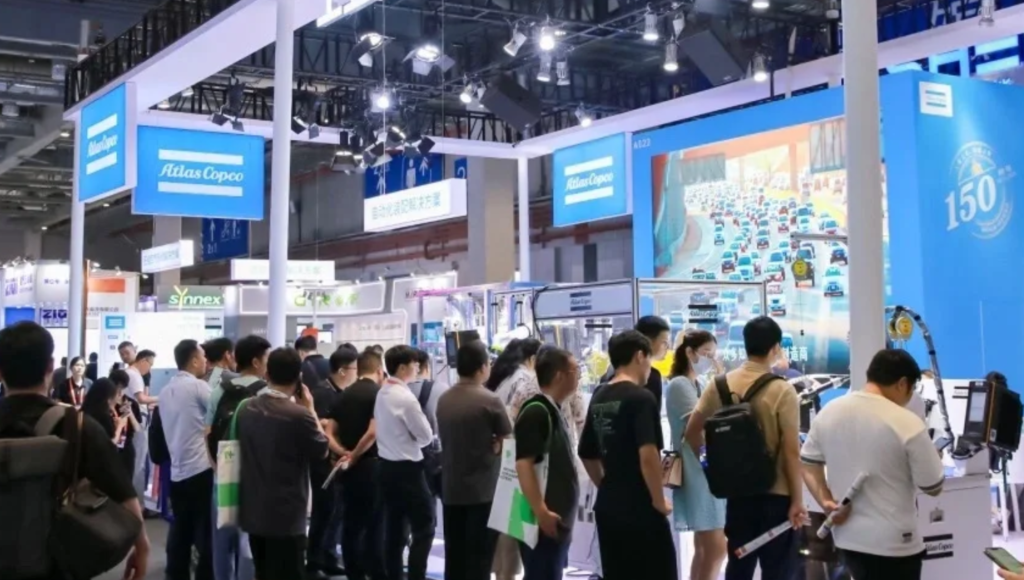
Atlas Copco emphasizes energy efficiency, digitalization, and system optimization, while Ingersoll Rand focuses on robustness, practicality, and ease of maintenance.
| Dimension | أطلس كوبكو | Ingersoll Rand |
|---|---|---|
| Headquarters / أصل | Sweden (founded 1873) | United States (founded 1871; compressor business under Ingersoll Rand Inc.) |
| Technology philosophy | High efficiency, precision, sustainability; strong focus on VSD⁺ and SmartLink | Reliability, durability, and modular design for easy maintenance |
| Air end development | 100% self-developed (SR / Neos profiles) | 100% self-developed (R-Series air end) |
| Oil-free technology | Global leader (ZR / ZT, ISO 8573-1 Class 0) | Strong capability (NIR/NXP), but lower global share |
| Variable speed technology | VSD⁺ with permanent magnet motor and dual conversion | PM+ variable speed, mature but later adoption |
| Energy efficiency | Most models reach ISO 1217 Class 1 | Main models reach Class 1; some older models Class 2 |
| Price positioning | Higher (10–25% premium) | Mid-to-high, stronger price–performance ratio |
| After-sales service | Global unified standards, fast but costly | Strong local service, lower labor and parts cost |
| Typical users | Multinationals, food, pharma, high-end manufacturing | Automotive, metallurgy, general industry |
Product Comparison
Although both brands cover similar product categories, their strengths become clearer when viewed side by side at the product level.
Differences that appear minor in specifications often translate into meaningful gaps in operating cost, service behavior, and long-term reliability.
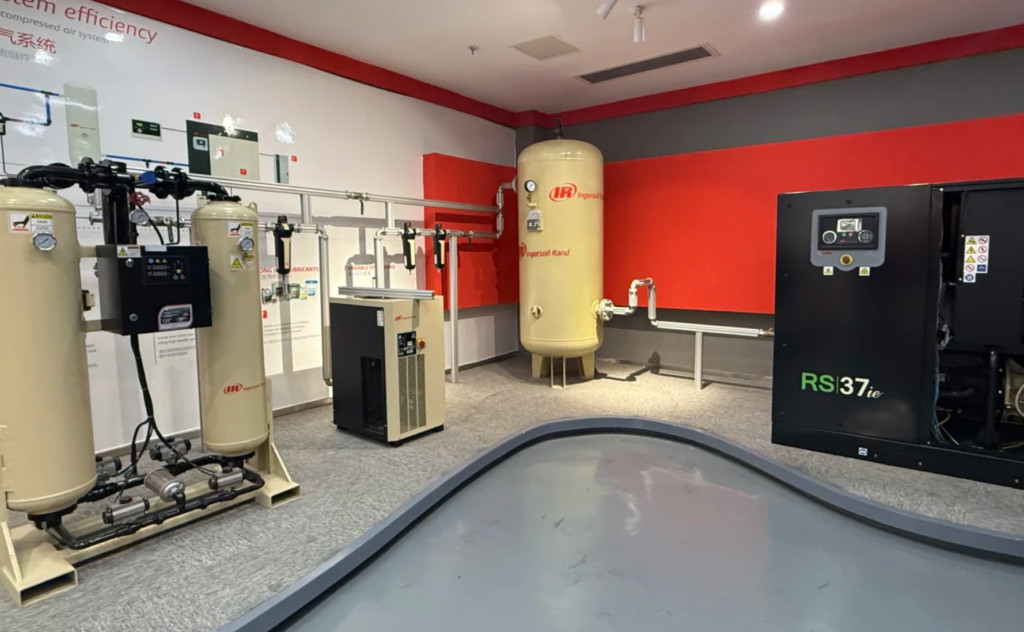
Oil-Injected Screw Compressors (Mainstream Market)
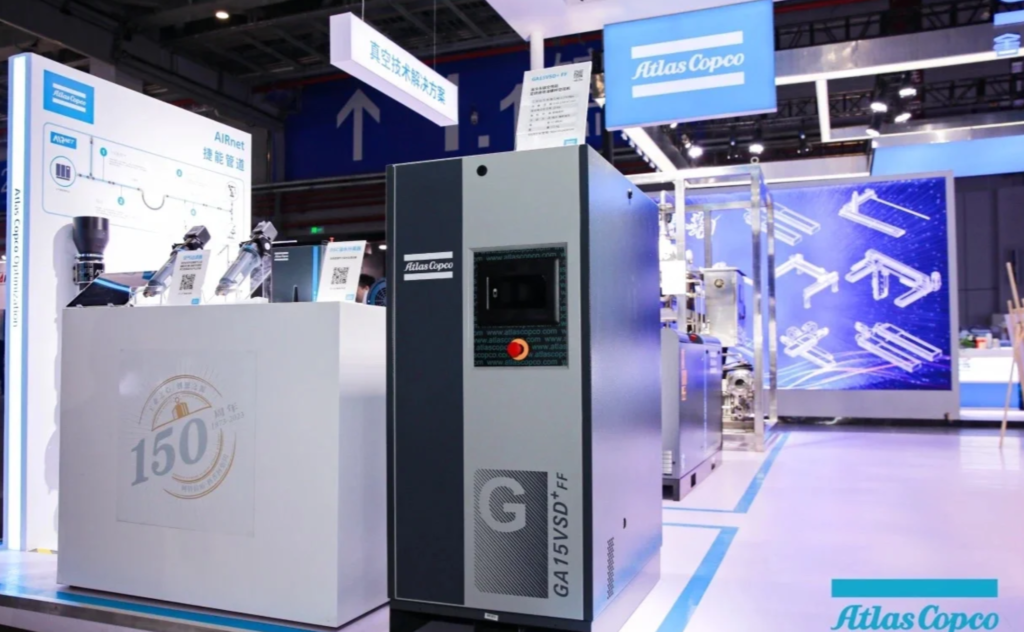
| Item | Atlas Copco GA VSD⁺ | Ingersoll Rand R-Series PM+ |
|---|---|---|
| Core advantage | Industry-leading energy efficiency | Strong structure, long service life |
| Typical specific power | As low as ~6.0 kW / 100 cfm (جا 30 VSD⁺) | Slightly higher than GA VSD⁺ |
| Control & design | Intelligent temperature control, IP54 VSD, low-noise (<65 ديسيبل) | Fully enclosed acoustic design (<68 ديسيبل) |
| Energy recovery | Optional | Often standard |
| Best suited for | High electricity cost, variable air demand, noise-sensitive plants | Heavy industry, continuous operation, reliability-focused users |
| Cost positioning | Higher initial investment | Lower initial cost |
Field data shows GA VSD⁺ typically saves 3–8% more energy under the same operating conditions, while the purchase price is around 15% higher than the R-Series PM+.
Oil-Free Compressors
| Item | Atlas Copco ZR / ZT | Ingersoll Rand NIR / NXP |
|---|---|---|
| Oil-free standard | ISO 8573-1 Class 0 | ISO 8573-1 Class 0 |
| Market position | Global market leader | Strong but smaller global footprint |
| Cooling options | ZR water-cooled, ZT air-cooled | NIR water-cooled, NXP air-cooled |
| Energy recovery | Widely applied, mature solutions | Available, fewer reference cases |
| Typical industries | Food & beverage, pharma, electronics | General industry, water-scarce regions |
| Application validation | Extensive multinational references | Fewer global benchmark cases |
When Class 0 certification is mandatory, both brands qualify, but Atlas Copco offers more mature global application experience and validation.
Mobile Air Compressors
| Item | Atlas Copco X-AIR / XAS | Ingersoll Rand P-Series / XP-Series |
|---|---|---|
| Core strength | Intelligent control, SmartLink monitoring | Strong diesel matching, stable output |
| Typical applications | Mining, large infrastructure projects | Construction sites, heavy-duty field work |
| High-altitude performance | Good | Very strong, especially in North America |
| Parts & accessories | Higher cost | More affordable, widely available |
| Regional dominance | Global, especially Europe and Asia | North America-focused |
How Should Global Buyers Choose?
There is no universal winner. The correct choice depends on region, application, and cost priorities.
Brand selection should be based on life-cycle cost, service environment, and performance sensitivity rather than name recognition alone.
Prefer Atlas Copco if:
- Operations are located in Europe, Asia, or Africa with stronger Atlas Copco service coverage
- Electricity costs are high and energy efficiency is a priority
- Air quality requirements are extremely strict (food, pharmaceuticals, electronics)
- Digital management, remote monitoring, and predictive maintenance are required
- Budget allows focus on long-term operating cost rather than purchase price
Prefer Ingersoll Rand if:
- Operations are mainly in North America or Latin America
- Working environments are dusty, harsh, or heavy-duty
- On-site maintenance capability is strong and serviceability outweighs marginal energy savings
- Budget is limited but top-tier brand reliability is required
- Existing equipment is already Ingersoll Rand and brand unification is preferred
خاتمة
Atlas Copco leads in energy efficiency and digital integration, while Ingersoll Rand excels in durability and maintenance practicality. The optimal choice depends on operating conditions, service expectations, and long-term cost strategy—not brand reputation alone.