Dónde encontrar manuales de piezas de Atlas Copco ?
Missing or incorrect parts manuals often result in wrong part selection, extended downtime, and repeated maintenance errors—especially for older, cross-region, or discontinued Atlas Copco equipment.
Atlas Copco parts manuals are typically obtained through existing suppliers, official Atlas Copco channels, local authorized dealers, or experienced professional global suppliers, each with different levels of accessibility and completeness.
Existing Suppliers
The original equipment supplier is often the first point of inquiry, but this channel is increasingly unreliable over time.
Existing suppliers may still retain electronic or paper versions of parts manuals delivered with the equipment at the time of purchase.
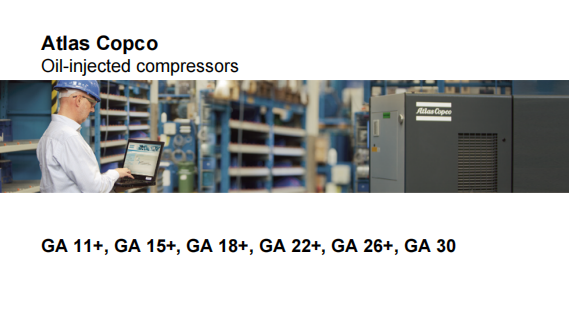
In practice, Atlas Copco compressors often remain in service for more than 10–15 years. Durante este período, suppliers may change ownership, exit the market, or lose historical technical archives. Equipment is frequently resold, making it difficult for current users to trace the original procurement source. Además, many suppliers act only as trading intermediaries and never retain full technical documentation. For discontinued or upgraded models, even the original supplier may no longer have access to archived manuals.
| Advantage | Limitation |
|---|---|
| Direct historical source | High chance of lost or missing records |
| No access restrictions | Depends on supplier survival and records |
| Familiar with original order | Poor coverage for old models |
Atlas Copco Official
Official Atlas Copco sources provide the highest level of accuracy, but access is tightly controlled.
Atlas Copco’s official platforms offer the most authoritative parts manuals, precisely matched to serial numbers and revision versions.
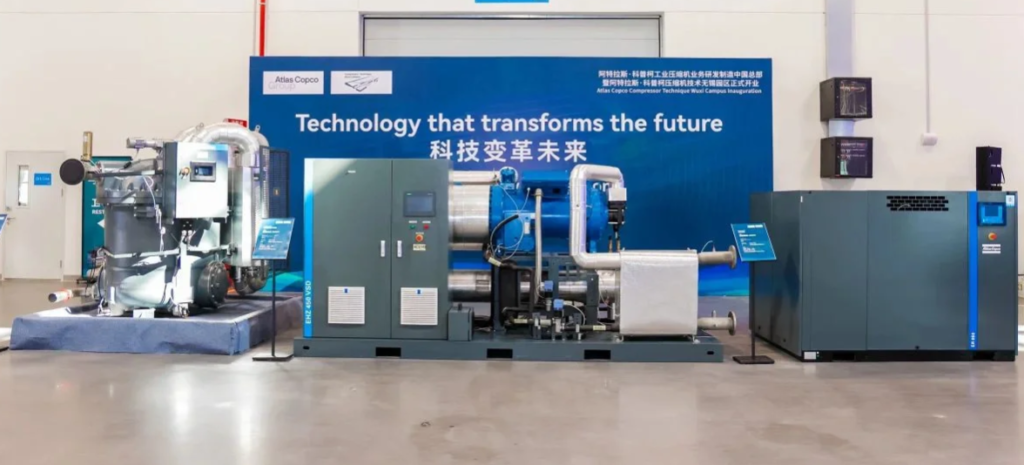
Manuals obtained through official websites, service centers, or parts portals are technically complete and aligned with factory standards. Sin embargo, access is usually restricted to registered corporate customers, contract service users, or authorized partners. Older models or equipment sold in less common regions may have been archived or never digitized. Requests often require full serial number verification and ownership confirmation, with long response cycles, making this channel difficult for non-contracted users.
| Official Source Benefit | Practical Constraint |
|---|---|
| Highest data accuracy | Strict access permissions |
| Correct revision match | Serial number verification required |
| Factory-standard data | Limited availability for old models |
Local Authorized Atlas Copco Dealer
Authorized dealers provide efficient access for mainstream equipment within their service territory.
Local authorized dealers can usually retrieve parts manuals for models they officially sell or maintain.
This channel works well for common compressors that are still under warranty or under active service agreements. Sin embargo, dealers’ access rights are region-specific. Equipment imported from other markets, discontinued models, or units sold outside the dealer’s authorization scope are often unsupported. Smaller service centers may only provide standard maintenance kits rather than full exploded diagrams or detailed parts listings.
| Suitable Scenario | Key Limitation |
|---|---|
| Local mainstream models | Regional data access only |
| Warranty-covered units | Limited support for legacy systems |
| Active service contracts | Partial documentation availability |
Professional Global Supplier
When official and regional channels fail, professional global suppliers become the most practical solution.
Experienced global suppliers often maintain extensive historical databases covering multiple generations of Atlas Copco equipment.

These suppliers, particularly in manufacturing-intensive regions such as China, accumulate technical documentation through long-term involvement in repairs, refurbishment, and spare parts supply. Their resources may include scanned manuals, internal training materials, and parts cross-reference data. Although not officially authorized, they can often reconstruct the correct parts manual using nameplate details, serial numbers, or known part numbers. Data quality varies, so critical specifications should be independently verified, but this channel is often the only viable option for discontinued or cross-region equipment.
| Capability | Practical Value |
|---|---|
| Historical manual archives | Supports discontinued models |
| Serial-based manual matching | Works without original documents |
| Multi-generation coverage | Solves cross-region equipment gap |
| Flexible document formatting | Improves usability |
Conclusión
Finding Atlas Copco parts manuals usually requires combining multiple channels. Official and dealer sources ensure accuracy, while professional global suppliers provide essential coverage for older, discontinued, or cross-region equipment.