Genuine Original vs Replacement: How to Choose Atlas Copco Parts
Using the wrong parts may seem cost-effective initially, but it often leads to hidden failures, higher energy consumption, and irreversible damage to Atlas Copco air compressors.
Choosing between genuine original and replacement parts directly affects equipment reliability, operating cost, safety compliance, and long-term service life.
What Damage Will the Use of Replacement Parts Cause to the Atlas Copco Air Compressor?
Atlas Copco air compressors are engineered as highly integrated systems with strict requirements for material properties, tolerances, thermal resistance, and control logic.
Uncertified replacement parts may fit dimensionally but often disrupt system balance, leading to performance loss and cascading failures.
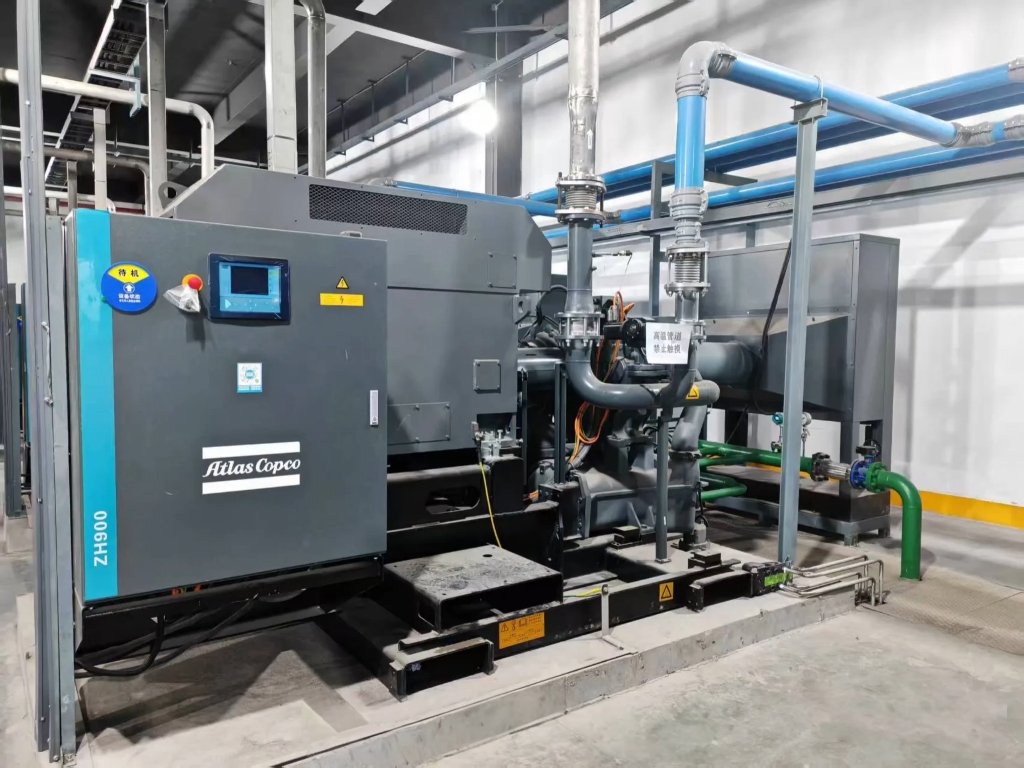
In practical operation, the most common impacts include reduced filtration accuracy, inefficient oil–air separation, and unstable pressure regulation. For example, low-quality filters allow fine dust to enter the air end, accelerating rotor wear. Inferior oil separators increase oil carryover, contaminating downstream equipment. Poorly responsive intake or minimum pressure valves disturb load–unload logic, causing frequent cycling and increased power consumption.
At the component level, non-original seals and bearings degrade faster under high temperature and pressure, resulting in oil leaks, air leaks, and shaft misalignment. In oil-free compressors, using non–Class 0 compliant parts introduces contamination risks that can compromise food, pharmaceutical, or electronics production. Electrical replacement parts of unknown quality may also create overheating, short-circuit, or fire hazards.
More critically, a single low-quality component can trigger system-level damage. A stuck temperature control valve may cause repeated high-temperature shutdowns, eventually leading to air end seizure or motor burnout. Repair costs in such cases far exceed any initial savings. In addition, once non-certified parts are identified, Atlas Copco may refuse warranty coverage and remote technical support.
| Risk Category | Typical Consequence |
|---|---|
| Performance loss | Lower output, higher oil carryover |
| Energy inefficiency | Increased power consumption |
| Mechanical wear | Shortened air end and bearing life |
| Safety and compliance | Oil contamination, electrical hazards |
| Warranty impact | Loss of factory support and service rights |
Which Atlas Copco Air Compressor Parts Must Not Be Replaced
Not all components are suitable for substitution. Certain core parts are fundamental to system safety, efficiency, and control accuracy.
The following components must always use genuine original or officially certified refurbished parts.
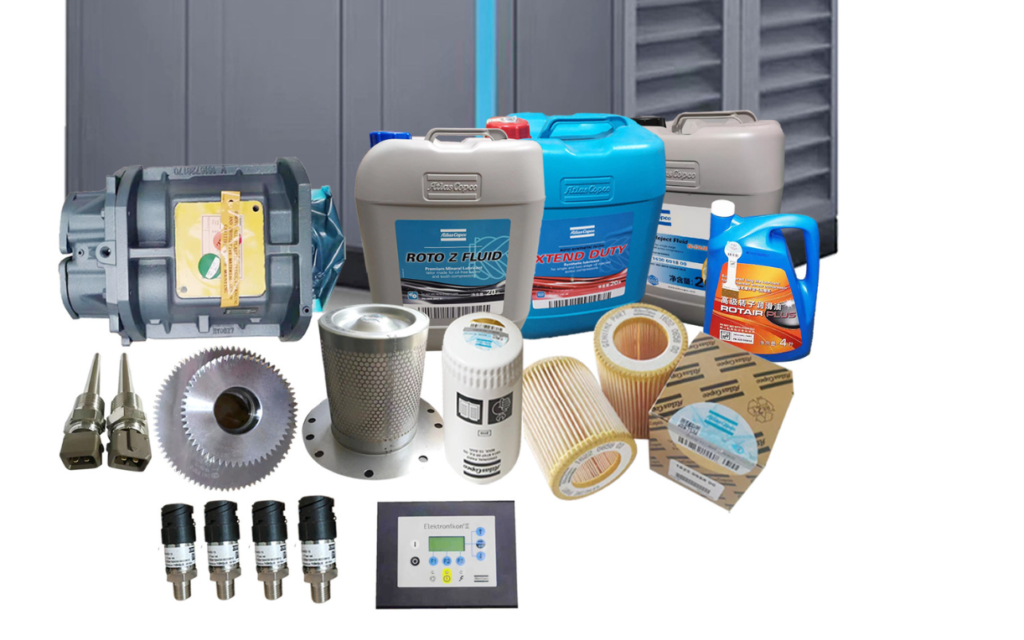
The air end is the core of the compressor. Its rotor geometry, clearances, and dynamic balance are precisely engineered. Non-original or dismantled air ends often cause excessive vibration, rapid efficiency loss, or catastrophic failure. If budget constraints exist, only Atlas Copco–authorized refurbished air ends should be considered.
Motors are another critical component. Original motors are designed with specific insulation class, protection level, and thermal characteristics matched to the control system. Replacement motors with mismatched starting current or insufficient protection are prone to failure in dusty or humid environments.
Sensors—including temperature sensors, pressure transmitters, and dew point meters—form the feedback loop of the intelligent control system. Inaccurate or slow-response replacements lead to false alarms, unstable operation, or unexpected shutdowns.
Oil-free compressors such as the ZR and ZT series have even stricter requirements. Coatings, seals, and coolers must comply with ISO 8573-1 Class 0 standards. Any substitution undermines oil-free certification and introduces serious compliance risks.
Control system components, including Elektronikon® controllers and VSD drives, involve software authorization and hardware encryption. Non-original modules are incompatible and may completely disable the machine.
| Component Type | Reason Replacement Is Not Acceptable |
|---|---|
| Air end | Precision geometry and balance requirements |
| Motor | Thermal and electrical system matching |
| Key sensors | Control accuracy and system stability |
| Oil-free components | Class 0 compliance and safety standards |
| Control modules | Software authorization and hardware encryption |
Conclusion
Genuine Atlas Copco parts protect performance, safety, and lifecycle cost. Replacement parts may save money short term, but core components should never be compromised to avoid irreversible damage and operational risk.